
California has a new law on who may call themselves an osteopath. The governor approved Assembly Bill 1703 on September 27, 2026, and its key sections take effect January 1, 2028 (1).
The law was presented as a way to keep untrained hands off patients. In its final form it does something narrower. It leaves the hands-on skill open to California’s licensed health professions as it is now, and it reserves a few words for the state’s osteopathic medical professionals. The skill is open. A few words are protected, maybe.
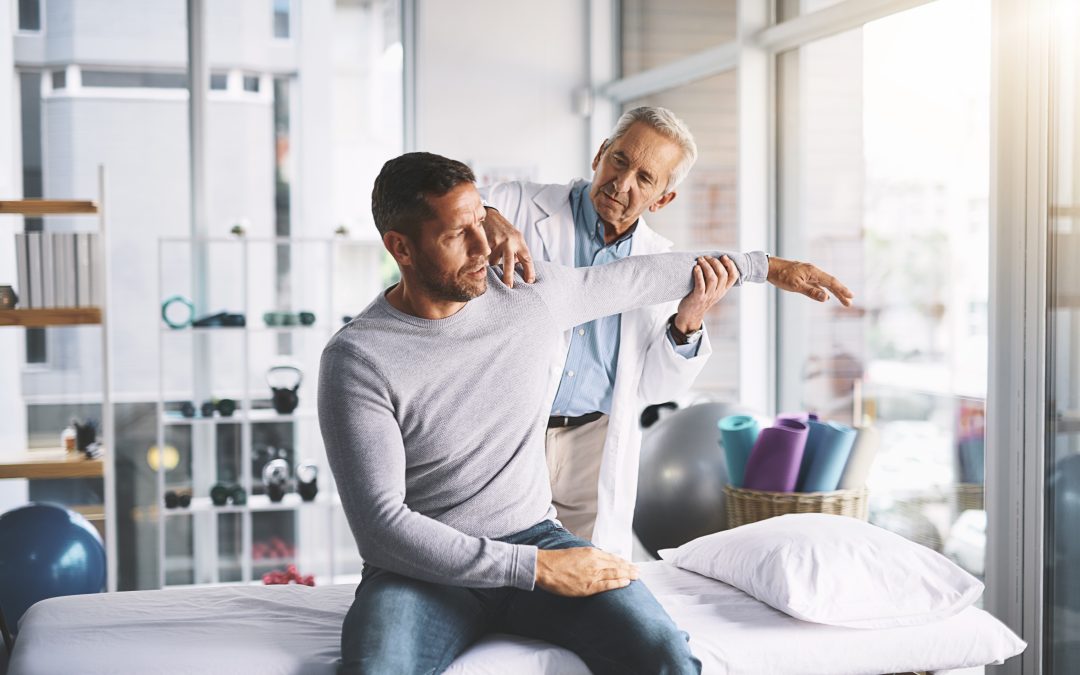
The law has two parts. The first concerns a treatment. Osteopathic manipulative treatment, or OMT, is hands-on care in which a clinician uses the hands to diagnose and treat problems in the muscles and joints. Until now, an unlicensed person could offer it in California by first disclosing that he or she held no license. The new law closes that option (1).
The second part concerns words. Anyone not licensed by the Osteopathic Medical Board of California commits a crime by using the phrase “doctor of osteopathy” or the initials “D.O.” The word “osteopath” is also off limits when it suggests the person holds an osteopathic license (1).
The bill’s primary sponsor was the Osteopathic Physicians and Surgeons of California (OPSC), the state association of osteopathic physicians. OPSC’s stated target was a growing number of osteopaths trained abroad. These individuals are not physicians and hold no state license, yet some advertise treatment for medical conditions (2).
The sponsor’s case rests on training. An American Doctor of Osteopathic Medicine (DO) finishes four years of medical school, including more than 200 hours of training in OMT, and then a residency (2). A state license is the proof of that training. Patients cannot judge a curriculum, but they can check a license. That is a sound argument, and it is the law’s best one.
The trouble is that the title rule does not follow it. The rule does not ask whether a person is a licensed physician. It asks which board issued the license (1). California has two medical boards. The Medical Board of California licenses holders of the Doctor of Medicine (MD) degree. The Osteopathic Medical Board licenses DOs. An MD is a complete physician with a state license. Yet under the title rule of AB 1703, one might assume an MD stands in the same place as the unlicensed practitioner the law was written to stop.
Most of the states would not be inclined to write such a rule. Only 12 states now have separate medical and osteopathic boards (3). In the rest of the country, a single “composite” board licenses both MDs and DOs, and the key issue is whether a person has a medical license or not. The national model for state medical practice acts takes the same view. The Federation of State Medical Boards’ guidelines reserve “Doctor of Osteopathy” and “D.O.” for medical licensees. The word “osteopath” is not on the list (4).
The second problem is what happened as the treatment rule progressed through the legislative process. For most of the bill’s time in the legislative hopper, the rule had no stated exceptions. That was still true of the version amended on August 13, 2026 (5). On August 20, five days before the final votes, lawmakers added this sentence (6): “Nothing in this paragraph shall prohibit the practice of a California-licensed health care profession or massage services authorized by California law” (1).
In plain terms, a licensed MD may use OMT in his or her practice. So may other licensed clinicians working within their own state-licensed fields. The law itself now says the skill does not belong to one profession. The title is what was left for the Osteopathic Board to regulate.
The public announcement of the signing describes a different law. On September 30, the sponsor, in partnership with the American Osteopathic Association (AOA), announced that the law makes it a misdemeanor for anyone not licensed by the Osteopathic Board “to use osteopathic titles or to perform osteopathic manipulative treatment” (7). That overstates the law, and the difference matters.
As described in the amended bill, the statute does not limit OMT to the Osteopathic Board’s licensees. Its exception protects every California-licensed health profession, and that includes MDs licensed by the Medical Board (1).
The announcement also refers broadly to “osteopathic titles.” The new section names two terms outright and restricts a third only when it implies a license, whatever that means (1). The announcement does not mention the exception or the 2028 start date. On one point it is accurate: the initials “DO” are closed to everyone outside the Osteopathic Board’s scope, or so it appears at first glance (1,7). A physician or patient who relies on the announcement alone may come away with the wrong idea of who may do what.
Interestingly, the protected words have a history that makes the law harder to explain. The profession itself set “osteopath” aside. In January 1926, L. Alice Foley, DO, wrote in the AOA’s journal that the public “call the allopath their physician and think of us as osteopaths.” “We certainly are physicians in every sense of the word,” she added. Her remedy was to say “osteopathic physicians” (8). In 1960, the association made her remedy its rule. Its House of Delegates voted to use “osteopathic physician and surgeon” in place of “osteopath,” keeping the older word “for historical, sentimental, and informal discussions only” (9,10). A word saved for sentiment in 1960 will be guarded by California criminal law in 2028.
The initials have a history too, and it is less settled than the statute assumes. The law bars “D.O.” in the same clause as “doctor of osteopathy,” as if one simply stood for the other (1). The founder of the profession did not use them that way. In 1893, Andrew Taylor Still wrote “Diplomate in Osteopathy” by hand on his first diplomas, and one of them went to a physician, William Smith, MD (11). Still avoided the word “doctor.” Smith wrote at the time, “We do not desire to be called doctors, we are Osteopaths” (11). In 1899, Still wrote: “D.O. means just what it stands for, Diplomate in Osteopathy” (11,12). The letters have since stood for Doctor of Osteopathy and Doctor of Osteopathic Medicine (9). In Britain, older osteopaths hold a Diploma in Osteopathy, also abbreviated DO (13,14). The ban on the initials is plain. What the initials mean is not, and the law never says.
That leaves the state with an odd job, one that seems absurd if taken to an extreme. Picture a licensed California physician, Jane Doe, MD. She takes accredited courses in OMT and uses it in patient care. All of that is lawful. In fact, organized osteopathic medicine has encouraged it. A.T. Still University, home of the founding college, offers a hands-on course called “Introduction to OMM for MDs and DOs” (15).
Now she wants her patients to know. She orders a sign: “Jane Doe, MD, Practice Limited to Osteopathic Manipulative Medicine.” She hangs a certificate that reads “Diplomate in Osteopathy.” The statute names neither phrase (1). But the policy the sponsor quotes seems to reserve osteopathic terms for graduates of osteopathic medical schools and of certain residencies with “osteopathic recognition” (16). The profession taught her the skill. Its policy would limit the words she may use for it.
Suppose she shortens the certificate’s title to its abbreviated initials? Now she has broken the California law on its face, though the credential is real (1). That raises a question of free speech. The Supreme Court has said states may ban misleading professional claims, but must show real harm before silencing truthful ones (17-19). A law that makes it a crime for a licensed physician to state a true credential may invite constitutional challenge.
The mixed messages add up. First, the sponsor’s case rests on licensure, yet the title rule leaves out licensed MD physicians. Second, the law opens the skill to every licensed profession, yet the announcement implies only one board’s licensees may perform it. Third, the profession consigned the word “osteopath” to history in 1960 and now guards it with criminal law. Fourth, the profession teaches MDs manipulation while its policy would restrict the words they use for it.
The AOA’s president said patients “deserve to know who is treating them” (7). He is right. But a patient who wants to know who has the training will not learn it from the title. Mixed messages contribute to patient confusion.
References
1. Assembly Bill 1703, 2025-2026 Reg Sess, ch 543, 2026 Cal Stat (adding Cal Bus & Prof Code §2453.3 and amending §2053.5). Approved September 27, 2026. https://legiscan.com/CA/text/AB1703/id/3460425 (accessed October 6, 2026).
2. Osteopathic Physicians and Surgeons of California. Protecting the integrity of osteopathic medicine in California: AB 1703. Updated May 14, 2026. https://www.opsc.org/page/AB1703 (accessed October 6, 2026).
3. Maine Board of Licensure in Medicine; Maine Board of Osteopathic Licensure. Question & answer. 2025. https://www.maine.gov/md/sites/maine.gov.md/files/inline-files/BOLIM%20and%20BOL%20QA_0.pdf (accessed October 6, 2026).
4. Federation of State Medical Boards. Guidelines for the Structure and Function of a State Medical and Osteopathic Board. Submitted to the House of Delegates May 2021. https://fsmbus.imiscloud.com/common/Uploaded%20files/AM%202021/Tab_H_Structure.pdf (accessed October 6, 2026).
5. Assembly Bill 1703, 2025-2026 Reg Sess (Cal), as amended in Senate August 13, 2026. https://legiscan.com/CA/text/AB1703/id/3455831 (accessed October 7, 2026).
6. Assembly Bill 1703, 2025-2026 Reg Sess (Cal), as amended in Senate August 20, 2026. https://legiscan.com/CA/text/AB1703/id/3456302 (accessed October 7, 2026).
7. American Osteopathic Association. OPSC and AOA applaud California for protecting patients and osteopathic truth in advertising. September 30, 2026. https://osteopathic.org/2026/09/30/opsc-and-aoa-applaud-california-for-protecting-patients-and-osteopathic-truth-in-advertising/ (accessed October 7, 2026).
8. Foley LA. Osteopaths or osteopathic physicians [editorial]. J Am Osteopath Assoc. 1926;25:371.
9. Gevitz N. From “Doctor of Osteopathy” to “Doctor of Osteopathic Medicine”: a title change in the push for equality. J Am Osteopath Assoc. 2014;114(6):486-497. doi:10.7556/jaoa.2014.099
10. Allen TW. ‘Osteopathic physician’ defines our identity. J Am Osteopath Assoc. 1993;93(9):884. doi:10.7556/jaoa.1993.93.9.884. Cited in: Gevitz N. From “Doctor of Osteopathy” to “Doctor of Osteopathic Medicine”: a title change in the push for equality. J Am Osteopath Assoc. 2014;114(6):486-497.
11. Gevitz N. The “Diplomate in Osteopathy”: from “school of bones” to “school of medicine.” J Am Osteopath Assoc. 2014;114(2):114-124. doi:10.7556/jaoa.2014.025
12. Still AT. [Endorsement]. J Osteopathy. 1899;6(4):141. Quoted in: Gevitz N. The “Diplomate in Osteopathy”: from “school of bones” to “school of medicine.” J Am Osteopath Assoc. 2014;114(2):114-124.
13. Two pathways: an ocean away: the story of how osteopathy crossed the Atlantic. The DO. February 2014. https://thedo.osteopathic.org/2014/02/an-ocean-apart-the-story-of-how-osteopathy-crossed-the-atlantic/ (accessed October 7, 2026).
14. General Osteopathic Council. Recognised qualifications 2026. https://www.osteopathy.org.uk/wp-content/uploads/2026/08/GOsC-Historical-Qualifications-July-2026.pdf (accessed October 7, 2026).
15. A.T. Still University, National Center for Osteopathic Principles and Practice Education. Introduction to OMM for MDs and DOs. https://atsu.edu/ncoppe/introduction-to-omm-for-mds-and-dos (accessed October 6, 2026).
16. Osteopathic Physicians and Surgeons of California. FAQs about AB 1703: protecting our profession, our patients, and our terminology. https://www.opsc.org/page/AB1703FAQs (accessed October 6, 2026).
17. Central Hudson Gas & Electric Corp. v. Public Service Commission of New York, 447 US 557 (1980).
18. Peel v. Attorney Registration and Disciplinary Commission of Illinois, 496 US 91 (1990).
19. Ibanez v. Florida Department of Business and Professional Regulation, 512 US 136 (1994).